


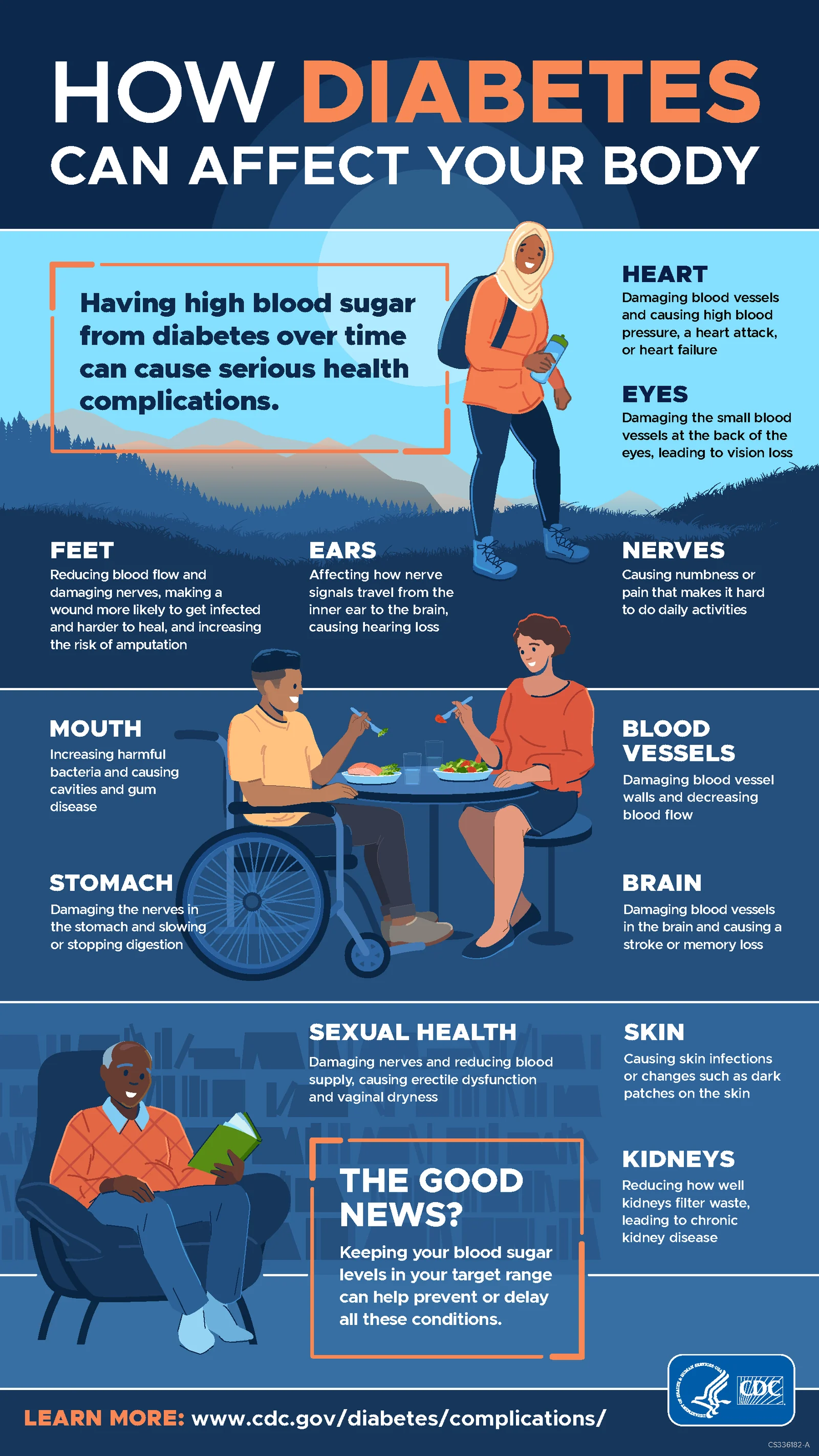
Having high blood sugar from diabetes over time can cause serious health complications throughout the body. This CDC infographic labels 12 areas at risk: the heart, eyes, feet, ears, nerves, mouth, blood vessels, stomach, brain, sexual health, skin and kidneys. The good news, in the CDC’s words: keeping your blood sugar levels in your target range can help prevent or delay all these conditions.
CauseHigh blood sugar over time
Best defenseStay in target range
Diabetes is often described as a blood sugar condition, which is true but undersells it. Blood reaches every organ, and over time, high blood sugar can damage the blood vessels and nerves that keep those organs working. That is why diabetes complications can show up in places people do not expect, from hearing to teeth to digestion.
This infographic from the CDC maps all of it onto a single page, with short, plain-language descriptions for each part of the body. Below, we walk through the 12 areas it covers, group them so they are easier to remember, and answer common questions about how diabetes affects the body. For more visual guides to health topics, browse our health infographics, or see more labeled breakdowns in our “anatomy of” infographics.
This page summarizes a public health infographic and is not medical advice. If you have diabetes or think you might, talk with your doctor or diabetes care team about your own targets and checkups.
How does diabetes affect the body?
The CDC’s one-line answer sits at the top of the infographic: having high blood sugar from diabetes over time can cause serious health complications. Most of the complications it lists come back to two kinds of damage, to blood vessels and to nerves. When vessels are damaged, organs get less blood. When nerves are damaged, signals for feeling, digestion and other functions stop working properly.
12 diabetes complications, part by part
Here is every area the infographic labels, with the CDC’s description of what diabetes can do there.
| Part of the body | How diabetes can affect it |
|---|---|
| Heart | Damaging blood vessels and causing high blood pressure, a heart attack or heart failure |
| Eyes | Damaging the small blood vessels at the back of the eyes, leading to vision loss |
| Feet | Reducing blood flow and damaging nerves, making a wound more likely to get infected and harder to heal, and increasing the risk of amputation |
| Ears | Affecting how nerve signals travel from the inner ear to the brain, causing hearing loss |
| Nerves | Causing numbness or pain that makes it hard to do daily activities |
| Mouth | Increasing harmful bacteria and causing cavities and gum disease |
| Blood vessels | Damaging blood vessel walls and decreasing blood flow |
| Stomach | Damaging the nerves in the stomach and slowing or stopping digestion |
| Brain | Damaging blood vessels in the brain and causing a stroke or memory loss |
| Sexual health | Damaging nerves and reducing blood supply, causing erectile dysfunction and vaginal dryness |
| Skin | Causing skin infections or changes such as dark patches on the skin |
| Kidneys | Reducing how well the kidneys filter waste, leading to chronic kidney disease |
Grouping the effects of diabetes on the body
Twelve items are a lot to remember. Grouping them by the kind of damage involved makes the pattern clearer.
- Blood vessel damageHeart, eyes, blood vessels, brain and kidneys. Narrowed or damaged vessels raise the risk of heart attack, stroke, vision loss and kidney disease.
- Nerve damageNerves, stomach and ears. Damaged nerves can mean numbness or pain, slowed digestion and hearing loss.
- Both at onceFeet and sexual health. Less blood flow plus nerve damage is why foot wounds heal slowly and why diabetes can affect sexual function.
- Infection and tissue changesMouth and skin. Diabetes can increase harmful bacteria, leading to cavities and gum disease, and cause skin infections or dark patches.
Why does diabetes affect the feet?
The feet are one of the best-known diabetes complications, and the infographic explains why in one sentence: diabetes reduces blood flow and damages nerves. With less feeling, a small cut or blister can go unnoticed. With less blood flow, it heals slowly and is more likely to get infected. Together, those raise the risk of amputation, which is why foot checks are a standard part of diabetes care.
How does diabetes affect the eyes and kidneys?
Both organs depend on networks of very small blood vessels. In the eyes, the CDC describes diabetes damaging the small blood vessels at the back of the eye, which can lead to vision loss. In the kidneys, it reduces how well they filter waste, which can lead to chronic kidney disease. Neither problem always causes symptoms early, so regular eye exams and kidney checks matter.
The good news: target range is the shared defense
The infographic ends on a hopeful note that applies to every item on the list. Keeping your blood sugar levels in your target range can help prevent or delay all these conditions. Your target range is personal, so it is something to set with your doctor. Day-to-day habits that support it, such as balanced meals and regular activity, help too. Our hand portion guide and meal prep plan are simple ways to make balanced eating easier. To learn more from the source, the CDC points readers to its diabetes complications guidance at cdc.gov/diabetes/complications.
How diabetes affects the body: frequently asked questions
What does diabetes do to the body over time?
Having high blood sugar from diabetes over time can cause serious health complications. The CDC infographic lists 12 areas that can be affected: the heart, eyes, feet, ears, nerves, mouth, blood vessels, stomach, brain, sexual health, skin and kidneys.
What are the complications of diabetes?
They include high blood pressure, heart attack and heart failure, vision loss, foot wounds that are slow to heal and a higher risk of amputation, hearing loss, nerve numbness or pain, cavities and gum disease, slowed digestion, stroke or memory loss, erectile dysfunction and vaginal dryness, skin infections or dark patches, and chronic kidney disease.
How does diabetes damage the feet?
Diabetes reduces blood flow and damages nerves, which makes a foot wound more likely to get infected and harder to heal, and increases the risk of amputation.
How does diabetes affect the kidneys?
Diabetes can reduce how well the kidneys filter waste, which can lead to chronic kidney disease.
Can diabetes affect your teeth?
Yes. The CDC infographic says diabetes can increase harmful bacteria in the mouth and cause cavities and gum disease.
Can diabetes complications be prevented?
According to the CDC, keeping your blood sugar levels in your target range can help prevent or delay all of these conditions. Your target range is something to set with your doctor.
Source: the infographic above, produced by the U.S. Centers for Disease Control and Prevention (CDC), CS336182-A. Use of this material does not imply endorsement by the CDC or the U.S. government. This page is general information only and is not medical advice. Resized and converted to WebP by Infographiac; no other changes.





